How to Start Deer Hunting: Beginner's Complete Guide
Affiliate Disclosure: This article contains affiliate links. If you purchase through these links, we may earn a commission at no extra cost to you. This helps support our site and allows us to continue creating in-depth gear reviews. Our recommendations are based on independent testing and research.
Getting into deer hunting can feel overwhelming—there's an ocean of gear, regulations, terminology, and techniques to navigate. But here's the truth: thousands of new hunters start successfully every year, and it's simpler than the industry makes it seem. This guide covers everything a beginner needs to know to go from zero to their first deer hunt.
Step 1: Hunter Education
Before you can buy a hunting license in any US state, you'll need to complete a Hunter Education course. This is your first and most important step.
- Online + Field Day: Most states offer online courses that you complete at your own pace, followed by an in-person field day for hands-on skills and a written exam. Total time: 8-12 hours.
- Classroom Only: Some states offer traditional classroom-only courses over a weekend. These can be more effective because you get hands-on instruction throughout.
- Cost: Typically $10-25, sometimes free.
- Where to find: Visit your state's Department of Natural Resources (DNR) or Fish & Wildlife website. Search "[your state] hunter education" to find course schedules.
Step 2: Get Your License and Tags
After completing Hunter Education, you can purchase a hunting license. Every state has different requirements:
🎯Want our complete Deer Hunting checklist? Download it free — field-tested and printable.
Download Free Checklist- Base hunting license: Required for all hunting. Costs vary by state ($15-50 for residents).
- Deer tag/permit: A separate permit specifically for deer hunting. Some states include this with the base license, others charge additionally.
- Antlerless tags: Many states offer additional tags for does (antlerless deer). These are often easier to obtain and provide the best opportunity for new hunters.
- Where to buy: Most states sell licenses online through their DNR website or at retailers like Walmart, Bass Pro Shops, and local sporting goods stores.
Pro Tip for Beginners
Apply for a doe tag first. Does are more plentiful, less wary, and present more shot opportunities than bucks. There's zero shame in harvesting does—they provide excellent venison, and managing doe populations is critical for herd health. Many of the best hunters you'll ever meet fill their doe tags before chasing bucks.
Step 3: Choose Your Weapon
Rifle Hunting
The most common and accessible method for beginners. A rifle offers the longest effective range and the most forgiving shooting mechanics.
- Recommended starter calibers: .243 Winchester (light recoil, great for deer), .308 Winchester (versatile, widely available ammunition), or 6.5 Creedmoor (excellent accuracy, moderate recoil)
- Budget rifle picks: Ruger American ($400-500), Savage Axis II ($350-450), or Mossberg Patriot ($400-500). All are accurate, reliable, and affordable.
- Scope: A 3-9x40 scope covers virtually all deer hunting scenarios. Vortex Crossfire II ($150-200) is the go-to budget scope.
Shotgun Hunting
Required in some states and regions (especially in the Midwest where rifle hunting is restricted due to flat terrain). Modern shotgun slugs are accurate to 150+ yards with rifled barrels.
Bowhunting
The most challenging but also the most rewarding method. Requires a separate license in most states and extensive practice. Not recommended for absolute beginners—get a season or two of gun hunting under your belt first.
Step 4: Essential Gear for Your First Hunt
You don't need to spend thousands of dollars on gear. Here's what you actually need for your first deer hunt:
Must-Have Gear
- Weapon + ammunition: Sighted in and practiced with
- Blaze orange: Required in most states during firearms season. Hat and vest minimum, full jacket recommended. Check your state's requirements.
- Warm, quiet clothing: Layer appropriately. Avoid cotton. Wool or synthetic base layers, fleece mid-layers, and a quiet outer layer.
- Boots: Insulated, waterproof hunting boots. Your feet need to stay warm and dry for hours of sitting.
- Knife: A quality fixed-blade knife for field dressing. You don't need anything fancy—a Havalon Piranta ($35) or Buck 119 ($55) works perfectly.
- Flashlight/headlamp: You'll be walking in and out in the dark.
- License and tags: On your person at all times while hunting.
Nice-to-Have Gear
- Binoculars: Even inexpensive binoculars help you spot and identify deer. Vortex Crossfire HD ($150) is an excellent starter pair.
- Rangefinder: Helps you know exact shooting distances. Not essential for close-range stand hunting but valuable for open terrain.
- Backpack: A small day pack for water, snacks, extra layers, and hauling gear.
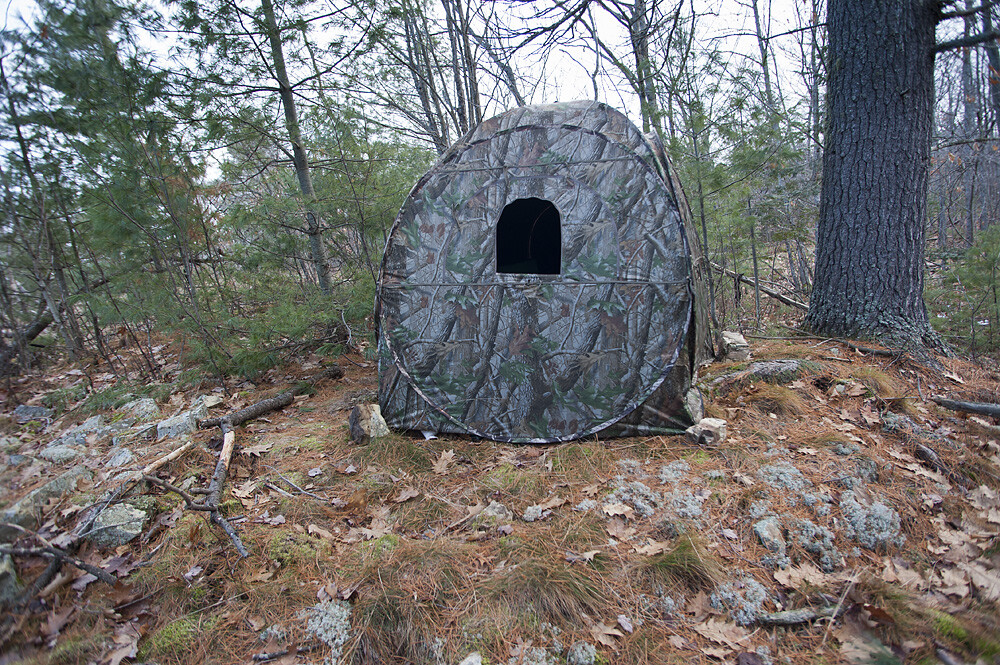
- Tree stand or ground blind: Elevates you above a deer's line of sight. Many public land areas have permanent stands. For your first hunt, consider a ground blind—they're safer and simpler to use.
Step 5: Find a Place to Hunt
Public Land
Every state has public hunting land. National Forests, state game areas, Wildlife Management Areas (WMAs), and Army Corps of Engineers lands are all available. Use your state's online mapping tool or the onX Hunt app to find public land near you.
Private Land
If you know landowners, simply ask permission. Many farmers and rural landowners welcome responsible hunters who help manage deer populations. Be respectful, offer to share harvested meat, and always leave the property better than you found it.
Mentored Hunts
Many state DNR departments and hunting organizations (like the National Wild Turkey Federation and Pheasants Forever) offer mentored hunts for new hunters. These pair you with experienced hunters who provide land access, equipment guidance, and hands-on instruction. This is the single best option for true beginners.
Step 6: Practice Shooting
Before heading to the woods, you need to be confident in your shooting ability. Ethical hunting demands that you can consistently hit a vital-zone-sized target at the ranges you'll be shooting.
- Sight in your rifle: Zero your scope at 100 yards. This takes an afternoon at a shooting range.
- Practice from hunting positions: Don't just shoot from a bench rest. Practice shooting from sitting, standing (with support), and from your tree stand or blind setup.
- Know your maximum range: For most beginners, limit your shots to 100 yards with a rifle. As your skills improve, you can extend this distance.
- Shot placement: Aim for the vital zone—the heart and lungs, located behind the front shoulder, roughly one-third up from the belly line. A 6-inch circle behind the front shoulder is your target.
Step 7: Your First Hunt Morning
- Arrive early: Be in your stand or blind at least 30 minutes before legal shooting light (check your state's regulations for exact times).
- Move slowly and quietly: Use a headlamp on low to navigate, step carefully, and avoid banging your equipment against trees.
- Sit still: The hardest part of hunting is doing nothing. Minimize movement and be patient. Deer appear when you least expect them.
- Scan with your eyes: Move your eyes, not your head. Look for movement, the flick of an ear, the white of a tail, or the horizontal line of a back against vertical trees.
- Wait for a good shot: Never rush a shot. Wait until the deer is broadside or quartering away, confirm it's legal to harvest, range the distance if possible, and take a steady, controlled shot.
After the Harvest
- Wait 30 minutes: After a good shot, wait at least 30 minutes before approaching the deer.
- Field dress promptly: Remove the internal organs as soon as possible to cool the meat. Watch YouTube tutorials on field dressing before your hunt—it's much easier than it sounds.
- Tag your deer: Attach your tag immediately after harvest, as required by law.
- Process the meat: Either take it to a local processor ($75-150 typically) or learn to butcher it yourself. A chest freezer and some YouTube tutorials are all you need.
Final Encouragement
Every experienced hunter was once a beginner who felt exactly the way you feel right now—uncertain, overwhelmed, and wondering if they'll ever figure it out. You will. Start with the basics, be safe, be ethical, and be patient. Your first deer may come on your first sit or your twentieth, but when it happens, you'll understand why millions of Americans hunt.
Welcome to the hunting community. We're glad you're here.
Your First Season: Month-by-Month Preparation
6 Months Before Season (Spring)
Complete your hunter education course. Most states require this for first-time hunters, and it's the best foundation you can build. The course covers firearm safety, hunting ethics, wildlife identification, regulations, and field skills. Many states offer both in-person and online options, but the in-person courses with hands-on components are significantly more valuable for beginners.
Start physical conditioning. Deer hunting demands more physical fitness than most people expect — carrying gear to a stand, sitting motionless for hours in cold weather, dragging a 150-pound deer through the woods, and processing the animal are all physically demanding. Walking 2-3 miles several times a week with a loaded pack builds the endurance you'll need.
4 Months Before Season (Summer)
Choose your weapon and start practicing. If bow hunting, you need consistent practice to develop accuracy and muscle memory. Shoot 20-30 arrows at least three times per week, focusing on form rather than distance. Start at 10 yards and gradually increase to your maximum comfortable range. For rifle hunters, schedule range sessions twice monthly, confirming your zero and practicing from field positions (kneeling, sitting, using a rest) rather than just bench shooting.
Begin scouting your hunting area. Summer scouting lets you find deer sign without disturbing fall patterns. Look for well-worn trails, rub lines from previous seasons, and food sources (agricultural fields, oak ridges, food plots). Set up trail cameras if regulations allow.
2 Months Before Season (Late Summer)
Finalize your gear. Don't wait until the week before opener to discover your boots need replacing or your raingear has a tear. Test every piece of gear: wear your boots for long walks, sit in your treestand to verify comfort, shoot your bow in your hunting clothes to check for string clearance issues, and pattern your shotgun at the range.
Purchase your license and tags. Some states sell out of non-resident tags or specific unit permits well before the season. Don't assume tags will be available the week before opener.
2 Weeks Before Season
Finalize stand locations based on current deer sign. Hang stands or deploy ground blinds, giving deer at least a week to acclimate to new objects in their environment. Trim shooting lanes conservatively — minimal cutting reduces habitat disturbance. Verify your entry and exit routes to stands, prioritizing quiet approaches that don't cross deer travel corridors.
Opening Week
Check weather forecasts and plan your hunts accordingly. Cold fronts trigger deer movement; calm, unseasonably warm days suppress it. Pack your gear the night before, using a checklist to ensure nothing is forgotten. Set two alarms — the only thing worse than a bad hunt is missing the hunt entirely because you overslept.
Finding Hunting Access
Public Land
Every state offers public hunting access on wildlife management areas, national forests, national grasslands, and state trust lands. Your state wildlife agency's website maps available public hunting areas and lists regulations specific to each property. Don't overlook small, local parcels — county conservation areas, municipal water authority properties, and Army Corps of Engineers land often provide hunting access with far less competition than large, well-known WMAs.
Private Land
Gaining private land access requires building relationships. Knock on doors — literally. Introduce yourself, explain that you're a new hunter looking for a place to hunt, and offer something in return: help with property maintenance, sharing harvested meat, or simply being a good steward of their land. Many landowners are willing to grant permission to polite, responsible hunters who ask properly.
Hunting Leases and Clubs
If private land permission proves difficult, hunting leases and clubs provide guaranteed access for an annual fee. Costs range from $500-3,000+ depending on location, property quality, and membership size. For beginners, a hunting club with experienced members provides not just access but mentorship — invaluable when you're learning the craft.
The Ethical Foundation
Hunting carries ethical responsibilities that every new hunter must internalize. These aren't suggestions — they're the foundation of what makes hunting a respected tradition:
- Fair chase: Give the animal a reasonable chance to escape. This means no shooting from vehicles, no spotlighting, no hunting over bait where prohibited, and taking only shots within your proven effective range.
- Clean kills: Practice until you can consistently hit the vital zone at your hunting distances. A clean kill is the single most important ethical obligation a hunter carries. If you're not confident in the shot, don't take it.
- Full utilization: Use as much of the animal as possible. At minimum, harvest all edible meat. Wasting game is illegal in most states and ethically indefensible in all of them.
- Respect for the animal: Treat every harvested animal with dignity. The taking of a life is not a casual act — it's a responsibility that deserves reverence regardless of the animal's size or trophy quality.
- Respect for other hunters and landowners: Leave the land better than you found it. Pick up your trash and others'. Follow all posted rules. Thank landowners who grant you access. Hunting's future depends on maintaining positive relationships with the non-hunting public and property owners.
Deer hunting is one of the most rewarding pursuits available to anyone willing to invest the time and effort to learn it properly. Start with education, practice diligently, hunt ethically, and embrace the inevitable setbacks as part of the learning process. The hunting community is remarkably welcoming to beginners who show respect for the tradition and the animals we pursue.
Recommended Beginner Hunting Gear
Check Price on Amazon →
Check Price on Amazon →
Check Price on Amazon →
Get More Gear Guides
Join 10,000+ hunters and get our free Ultimate Gear Checklist plus weekly reviews delivered to your inbox.
Share this guide:
Related Articles
Summer Deer Scouting 2026: Trail Camera Strategies for Fall Success
Complete summer deer scouting guide with trail camera placement strategies, mineral sites, food plot planning, and inventory techniques to prepare for fall hunting season.
How to Hunt Pressured Deer: Advanced Whitetail Tactics
Pressured whitetails play by different rules. Learn advanced tactics for hunting mature bucks that have survived multiple seasons of hunting pressure, from scent control to unconventional stand placement.
How to Hunt Public Land Deer: Tactics That Actually Work
Public land deer hunting demands different tactics than private property. Learn proven strategies for scouting, stand placement, and outsmarting pressured whitetails on state and federal land.